Before the First Acre: A Seed-Supply Standard for Public Restoration
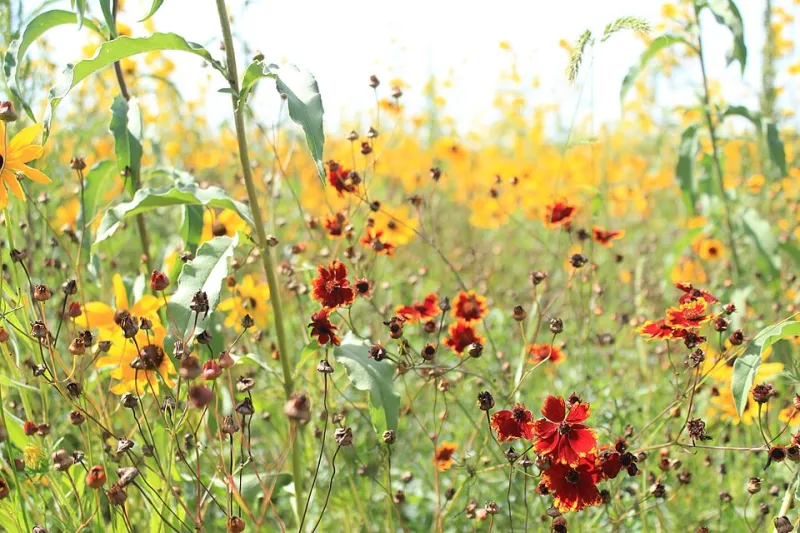
Photo: USFWS Mountain Prairie, Public domain, via Wikimedia Commons
Public restoration in the United States begins with a familiar sequence: a funding award, a site plan, a seed mix, and a planting date. The seed mix is usually treated as a detail of procurement rather than a determinant of ecological outcomes. Yet native seed is the first line item in nearly every restoration project and one of the last components to receive a supply standard. Agencies can specify a local ecotype in a grant agreement without knowing whether that ecotype exists in sufficient quantity, whether it has been tested for viability, or whether the vendor can deliver it within the contract period. The result is a system that commits to ecological targets before it has verified the biological inputs.
A specification without a supply chain
Federal and state restoration programs increasingly emphasize locally adapted seed. That emphasis is scientifically reasonable: plant materials adapted to local climate and soil conditions are more likely to establish, persist, and support associated wildlife. But a specification is not a supply chain. A contract may require a seed mix drawn from a particular watershed or elevation band, while the actual market for that material remains opaque. Vendors may hold wild-collected seed, agricultural increases, or blends of uncertain origin. Without common reporting, a purchasing officer cannot easily distinguish among them.
The problem is not that agencies lack good intentions. It is that grant agreements and procurement documents rarely ask the questions that would make provenance meaningful. Where was the parent material collected? In what year? How has it been stored? What are the germination and purity rates? Has it been tested for noxious weed contamination? These are standard questions in agricultural seed commerce. They remain inconsistent in public restoration, even as the ecological stakes rise.
What gets counted and what gets tested
A seed inventory is not simply a number of pounds. It is a set of claims about genetic origin, collection history, storage conditions, and biological performance. A credible inventory should allow an agency to trace a lot from collection location to delivery. It should also distinguish between material that is immediately available and material that is under contract for future production.
Testing is equally important. Germination rates vary widely among native species and among lots of the same species. Purity and noxious weed checks protect both the restoration site and neighboring lands. Without those data, a grantee may meet a weight-based specification while falling short of the ecological intent. A contract that pays for pounds rather than viable propagules creates an incentive to substitute quantity for quality.
Lead time is an ecological variable
Native seed is not manufactured on demand. Many species require multiple growing seasons to produce reliable quantities, and some are difficult to cultivate at scale. When awards are announced late and planting windows are fixed, agencies and grantees face a predictable squeeze. The easiest response is to substitute a more available material, often with less precise provenance. The substitution may be documented, but it is rarely evaluated against the original restoration objective.
Grant agreements should treat lead time as a planning requirement rather than an afterthought. A project that specifies a difficult-to-source ecotype should include a production schedule, a forward contract with a qualified grower, or a phased planting plan. Seed banks and nurseries can be partners in that planning, but only if contracts create room for multi-season arrangements. Otherwise, the schedule quietly becomes the de facto provenance standard.
A provenance-and-supply standard for grant agreements
A workable standard need not be elaborate. It can be built from clauses agencies already know how to administer. First, require provenance disclosure for every lot: collection location, elevation or ecological site where relevant, collection year, and whether the material is wild-collected or grown from documented stock. Second, require an audited inventory that separates available stock from contracted production. Third, require current test results for germination, purity, and noxious weed content, with acceptable thresholds set by species or project type. Fourth, require a lead-time schedule that matches the seed mix to realistic production and delivery windows. Fifth, establish clear substitution rules, including who approves a substitute and how the change is reported.
These clauses can be tiered. A small urban revegetation project may need a lighter version than a multi-thousand-acre grassland restoration. The point is not to burden every grantee equally. It is to make the same basic information available wherever public funds are buying ecological outcomes. Independent verification, whether through spot audits or a qualified third-party review, would give the standard credibility without turning every award into a research project.
Implementation questions worth asking
A supply standard will raise cost and capacity questions. Small growers may need technical assistance to meet testing and reporting requirements. Agencies may need shared databases or regional clearinghouses to avoid duplicating audit work. Tribal nations and local conservation districts, which often hold deep knowledge of native plant materials, should be involved in setting thresholds rather than treated only as vendors. And any standard should be piloted before it is imposed broadly, with attention to whether it improves delivery or simply adds paperwork.
The larger question is what public restoration is actually purchasing. If the answer is acres planted, then seed is a commodity. If the answer is functioning habitat, then seed is infrastructure. Infrastructure requires specifications, inventories, testing, and schedules. The first acre depends on all of them, and the grant agreement is the right place to say so.