The File Drawer Problem Comes to the Field: What Conservation Loses When Failures Stay Hidden
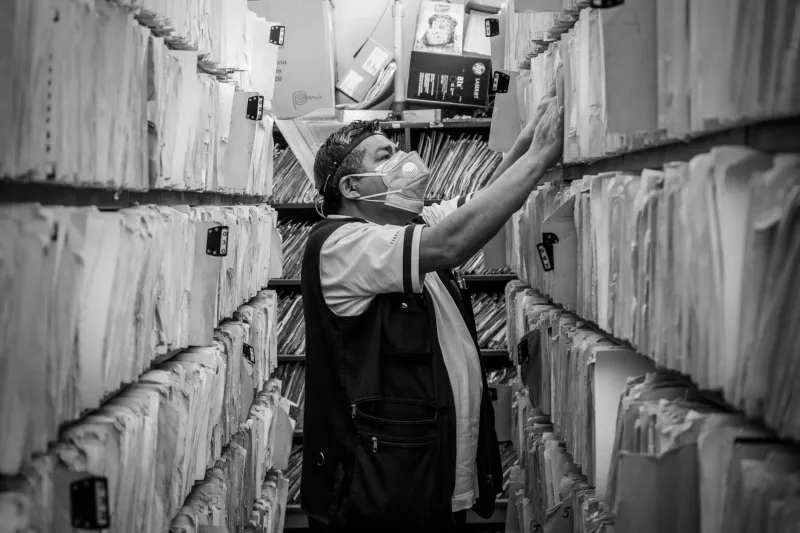
Somewhere in a state agency's filing cabinet is a monitoring report nobody wants to read: the riparian planting that never took, the fish passage structure that failed to move a single target species, the prescribed-grazing experiment that produced no measurable benefit. The project ended. The grant closed. The report went into the drawer.
That drawer is where American conservation science keeps its most expensive lessons — and, increasingly, it is the only place they exist.
The Asymmetry Nobody Funded
Publication bias is not a new concept. The social sciences confronted it a decade ago, spawning replication registries and pre-analysis plans. But the field sciences face a version of the problem that is arguably more acute, because the stakes are measured in acreage and appropriations rather than citations.
When a restoration technique succeeds, it earns a press release, a conference talk, and a peer-reviewed paper. When it fails, it often earns a brief mention in an internal memo — if monitoring happened at all. The result is a literature that systematically overstates the effectiveness of interventions, a phenomenon researchers have documented across wetland mitigation, translocation programs, and invasive-species control.
The consequences compound. A district office in one state adopts a bank-stabilization method that a paper in another region reported as promising — never learning that the follow-up data showed it collapsing within five years. Federal grant reviewers, evaluating applications against a published record skewed toward success, keep approving approaches with hidden failure rates.
A Registry Built for Bad News
A small team of researchers is attempting to change the incentive structure. Their tool is a registry for null and negative results — a public repository where practitioners can file short, structured reports on interventions that did not perform as expected, without the friction of full peer review.
The design choices matter. Entries are brief, templated, and searchable by species, habitat type, and intervention class. Contributors can remain anonymous at the project level, which lowers the professional risk of admitting failure in a field where reputations are built on wins. The registry's founders describe it not as a replacement for formal publication but as a shadow record — the counterweight to the success-biased canon.
Early submissions suggest the appetite is real. Practitioners who have spent careers watching money flow toward techniques they privately distrust are, it turns out, willing to say so on the record if someone builds the infrastructure for it.
From Registry to Requirement
A voluntary registry, however, only captures the failures of the already candid. The structural fix lies with funders — federal agencies, state wildlife grants programs, and the philanthropic foundations that underwrite much of the field's applied research.
The proposal is straightforward: make null-result reporting a condition of future awards. Any grantee whose project includes a monitoring component would be required to file results — positive, negative, or ambiguous — in a public repository within a defined window. Noncompliance would affect eligibility for subsequent funding cycles.
Critics will object that such mandates add administrative burden to organizations already stretched thin, and the concern is legitimate. But the compliance model already exists. Grantees file financial reports and performance metrics under penalty of ineligibility; adding a standardized outcomes disclosure is an extension of existing practice, not a departure from it.
What the Evidence Standard Buys
For a research network committed to evidence-based policy, the argument reduces to a question of stewardship. Conservation operates on constrained budgets and narrow windows — habitat lost does not return on a legislative timetable. Every dollar spent repeating a documented failure is a dollar unavailable for interventions with demonstrated promise.
The file drawer is not neutral. It is an active distortion of the evidence base, and it is priced into every appropriations request, every mitigation plan, and every ballot measure that promises restoration at scale. Opening the drawer is the cheaper option — by a wide margin.