Listed or Left Behind: Five Species at the Center of the ESA's Coming Reckoning
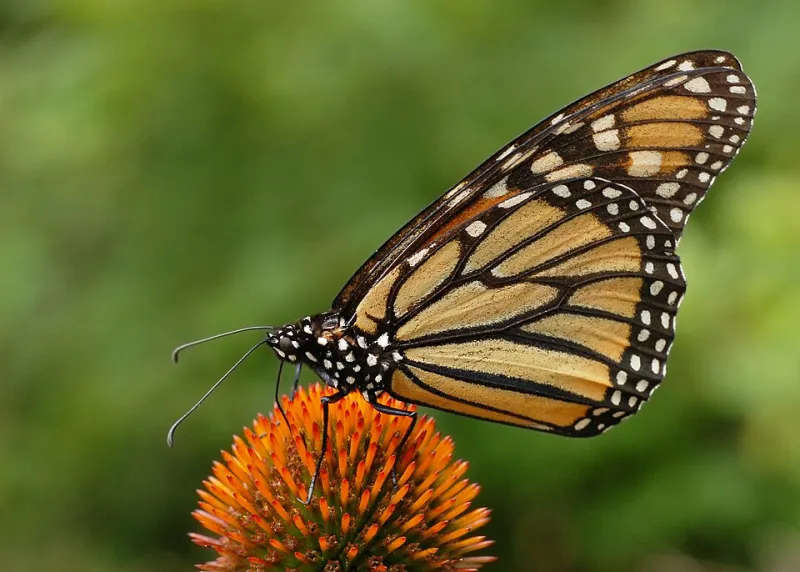
Photo: Photo by and (c)2007 Derek Ramsey (Ram-Man), GFDL 1.2, via Wikimedia Commons
The Endangered Species Act was drafted for a world of visible crises: a pesticide in the food chain, a dam blocking a river, a bulldozer on a wetland. The decisions now queued before the Fish and Wildlife Service and NOAA Fisheries involve a different problem entirely—species whose fates hinge on projections, models, and evidence that is genuinely incomplete. Five cases, in our view, will do more than any others to define the statute's next decade.
1. The Monarch Butterfly
No listing petition has carried more cultural weight or more analytical difficulty. Eastern monarch populations have declined dramatically since the 1990s, driven largely by herbicide-tolerant agriculture eliminating milkweed across the Midwest. Yet the species' numbers oscillate violently year to year, and winter counts in Mexico have shown partial recoveries that complicate trend interpretation. The service's repeated deferrals—ruling the listing warranted but precluded—reflect an uncomfortable truth: the monarch forces the agency to decide how much future risk, as modeled, can justify present regulation of land use across a continent. Whatever standard emerges here will be cited in every subsequent climate-driven petition.
2. The Struggling Salamanders of the Southeast
The southeastern United States is the global center of salamander diversity, and a cluster of petitions involving Appalachian and Coastal Plain species is testing whether the Act can function as a preemptive tool. Many of these salamanders occupy tiny ranges on a single mountain or creek system, and the primary threat—chytrid fungus and climate-driven moisture loss—has not yet produced observed declines. Listing a species before it visibly declines would mark a doctrinal shift; waiting would risk losing it first. Watch how the service handles the data gap between projected threat and documented harm.
3. The Greater Sage-Grouse
Technically not listed, and that is precisely the point. The sage-grouse has been the West's most consequential conservation standoff for a decade, with a patchwork of state plans and land-use amendments standing in for federal protection. Its recurring candidacy will force a reckoning with whether voluntary and state-led frameworks can substitute for listing—and whether courts will accept them as evidence of a species no longer needing the Act. The answer will shape conservation incentive programs nationwide.
4. The Eastern Hellbender and Its Kin
Recent genetic work split the hellbender into distinct species, instantly changing the conservation math for each. The case is a preview of a quiet revolution: molecular taxonomy is revealing that what regulators treated as one wide-ranging, secure species is actually several narrow, vulnerable ones. Expect a wave of petitions built on genetic reclassification, and expect courts to wrestle with which taxonomic standard—the one in force at listing or the latest phylogeny—governs.
5. The Ice Seal Complex of Arctic Waters
The ringed, bearded, and spotted seals of Alaskan waters were listed largely on projected sea-ice loss rather than observed population decline—the clearest precedent to date for listing on modeled futures. The next decade will test that precedent in reverse: if ice loss outpaces the models, or if populations prove more resilient than projected, courts and Congress will revisit whether projection-based listing was sound policy or an overreach that discredits the statute.
What These Cases Share
Strip away the biology and a common question runs through all five: what does the Act do when the evidence is honest about its own uncertainty? The statute's best-available-science mandate was written assuming science would arrive with an answer attached. Increasingly, it arrives with a probability distribution instead.
Our view is that this is manageable, but only if the agencies build the analytical machinery for it. That means listing decisions that state their confidence levels explicitly, recovery plans that specify what evidence would trigger revision in either direction, and monitoring commitments funded as part of the decision rather than deferred indefinitely. Uncertainty should slow the pace of certainty, not the duty of candor.
The alternative—deciding these cases case by case under political pressure, with no articulated standard—serves neither the species nor the landowners, tribes, and agencies whose decisions hang on the outcome. The next decade of the ESA will be written in the language of uncertainty. The only question is whether it will be written deliberately.