Before the Grant Renewal: Why Funders Should Treat Reproducibility as a Compliance Standard
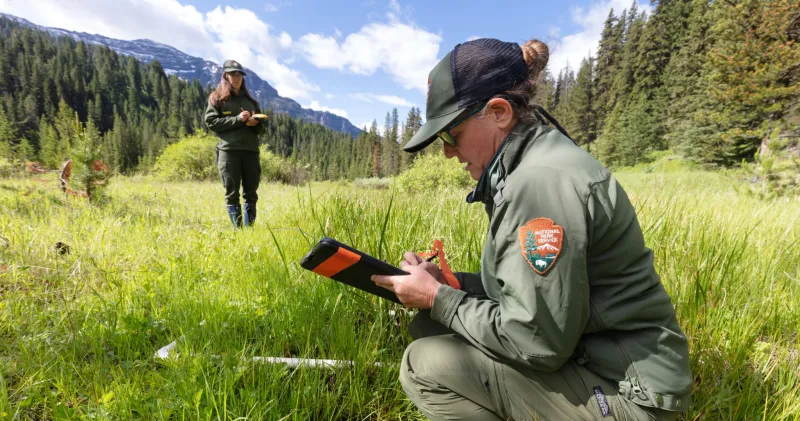
Photo: restoration ecologists taking field measurements wetland monitoring, via conservation-career-stg.s3.amazonaws.com
The social sciences spent the last decade confronting an uncomfortable truth: many landmark findings weakened or vanished when researchers attempted to replicate them under independent conditions. Conservation science, for the most part, assumed it was exempt. The field's confidence rested on long-term monitoring, tangible outcomes, and visible landscapes. That confidence is now being tested.
Across the nonprofit research community, a quiet methodological reckoning is underway. Organizations are importing pre-registration, independent re-analysis, and adversarial collaboration—tools refined during psychology's replication crisis—to interrogate their own flagship restoration programs. The early results are instructive, and occasionally humbling.
Three Programs, Three Outcomes
Consider three anonymized but representative cases drawn from recent independent evaluations of large-scale restoration initiatives in the American West and Southeast.
The first, a riparian revegetation program spanning multiple tributaries, reported dramatic gains in native bird abundance in its internal assessments. When an outside research team re-analyzed the underlying survey data using updated occupancy models, roughly half of the apparent effect disappeared—attributable not to failed restoration, but to detection probability artifacts in the original sampling design. The habitat work was sound; the evidence for it was not.
The second case involved a coastal wetland restoration effort whose sediment accretion targets were confirmed almost exactly under re-testing. Here, the original program had invested heavily in baseline instrumentation, and the replication validated it. The lesson is not that flagship programs fail on re-examination—it is that we cannot know in advance which ones will hold.
The third case is the most troubling. A widely cited upland grassland initiative had become a template for state-level cost-share programs. Independent re-evaluation found that reported vegetation outcomes were real but concentrated on the most resilient plots, a form of site-selection bias that inflated average performance estimates. The program was scaled based on numbers that, while not fabricated, were not representative.
The Incentive Problem
None of these outcomes reflects bad faith. They reflect the structural incentives of philanthropic and federal grantmaking. Program staff are rewarded for demonstrable success; re-testing one's own work offers little career upside. Interim reports emphasize positive findings. And funders, facing their own reporting pressures to boards and legislatures, rarely request the one deliverable that would matter most: an independent attempt to reproduce the headline result.
Pre-registration offers a partial remedy. When restoration programs commit in advance to their sampling design, analysis plan, and success criteria, the space for post-hoc narrative flexibility narrows considerably. Several national conservation organizations have begun publishing analysis plans before fieldwork begins—a practice that costs little and disciplines much.
A Modest Policy Prescription
The institutional funders—community foundations, federal cooperative agreements, and the large environmental grantmakers—occupy the leverage point. We propose three grant conditions, none of which requires new science:
-
Data availability. All monitoring data underlying reported outcomes should be deposited in a public repository within twelve months of project closeout, with appropriate privacy protections.
-
Pre-specified analysis. Proposals above a defined funding threshold should include a written analysis plan, time-stamped before data collection begins.
-
Replication reserve. Funders might reserve five to ten percent of a program's budget for independent re-evaluation of a random subset of funded projects, selected without regard to preliminary performance.
The third condition will attract the most resistance, and it deserves the most defense. A replication reserve reframes re-testing not as an audit of failure but as routine quality infrastructure—no different from the financial audits that major foundations already require. Organizations that welcome independent verification should be recognized, perhaps through a public registry of reproducibility commitments.
What Credibility Is Worth
Conservation policy in the United States depends on public trust, and public trust depends on claims that survive scrutiny. The replication crisis in psychology demonstrated that a field can be staffed by honest, competent people and still produce a literature that overstates what is known. Conservation is not doomed to the same fate—but avoiding it requires institutional machinery, not good intentions.
The programs profiled here emerged from re-testing with varying grades. All three emerged more credible. That, ultimately, is the argument funders should find persuasive: reproducibility is not a tax on the field. It is the asset that makes every future claim bankable.