Counting on Amateurs: When Volunteer Data Meets the Evidentiary Bar
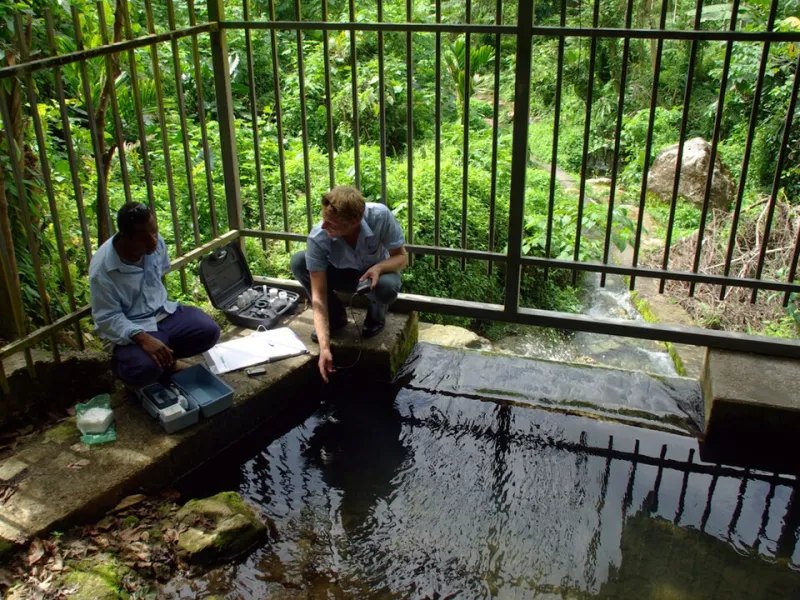
Photo: Department of Foreign Affairs and Trade, CC BY 2.0, via Wikimedia Commons
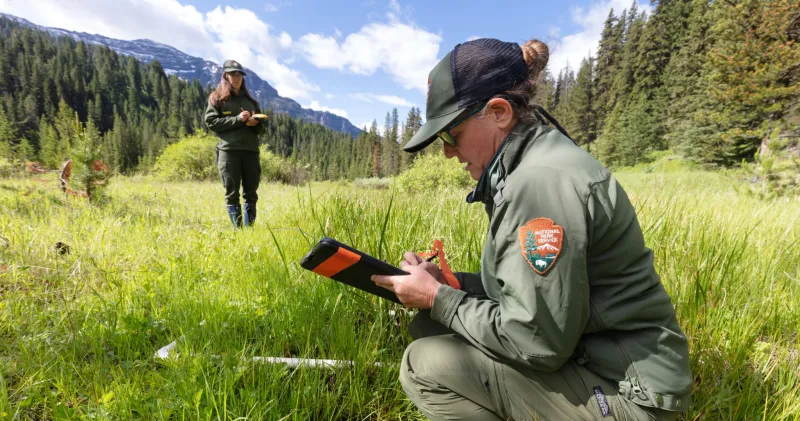
Every spring, thousands of volunteers crouch along stream banks from the Chesapeake to the Columbia, lowering test kits into the water and recording results on clipboards and phone apps. In aggregate, these observers generate more environmental data points per year than several federal monitoring programs combined. Yet when a state agency drafts a water quality standard or a watershed management plan, that record frequently sits outside the evidentiary file. The question confronting conservation institutions is no longer whether volunteer monitoring produces data of interest, but whether the machinery of American environmental governance can absorb it.
Scale Without Standing
The growth of community-based monitoring over the past two decades has been remarkable. Watershed watch groups now operate in all fifty states. The Audubon Christmas Bird Count, running since 1900, contributes continental-scale abundance records that researchers routinely use to model range shifts. Air quality volunteers, armed with low-cost particulate sensors, filled coverage gaps during western wildfire seasons that fixed regulatory monitors could not. In aggregate, the volunteer sector constitutes what is arguably the largest environmental observation network in the country.
Scale, however, has not translated into standing. Agency scientists distinguish between data collected under an approved quality assurance plan and data collected with good intentions. The distinction matters: under the Clean Water Act's assessment framework, a state's decision to list an impaired water body must withstand legal challenge, and volunteer-collected measurements, however abundant, are often the first evidence excluded.
Where the Record Holds Up
Dismissing the entire volunteer enterprise on quality grounds would be a mistake. Studies comparing trained volunteer stream monitoring with professional sampling have repeatedly found acceptable agreement for parameters such as pH, temperature, and turbidity. Structured programs with documented protocols, periodic calibration, and data validation produce records that meet or exceed the rigor of some agency datasets collected under budget constraints.
Bird counts illustrate a second pathway. Rather than pretending volunteers can replicate instrument-grade measurement, ecologists developed statistical models—occupancy models, effort corrections, detection adjustments—that treat observer variation as a parameter to be estimated rather than a flaw to be hidden. The result is a body of peer-reviewed science, cited in climate adaptation planning across the country, built almost entirely on amateur observation.
The lesson is that data quality is not a fixed property of who collects a sample. It is a function of protocol design, training, documentation, and analytical treatment. These are problems institutions know how to solve.
Where the Model Breaks Down
Honesty requires acknowledging the failure modes. Volunteer networks suffer from uneven geographic coverage that tracks population rather than ecological need—suburban streams are over-monitored; rural headwaters are invisible. Attrition erodes continuity, and a decade-long dataset with gaps is worth far less than its headline length suggests. Low-cost air sensors, meanwhile, can drift badly without calibration, and several studies have shown that raw readings from consumer devices overstate pollution episodes by wide margins.
There is also a subtler problem: selection bias in what gets reported. Volunteers gravitate toward degraded sites worth protesting and pristine sites worth celebrating, leaving the unremarkable middle under-sampled. For regulatory purposes, the unremarkable middle is often precisely what matters.
A Path to Formalization
If the network's institutional partners take one recommendation from this analysis, it should be this: the goal is not to replace professional monitoring but to formalize the interface between the two. Three mechanisms deserve attention.
First, credentialing. States should establish a tiered recognition system under which monitoring programs that complete a documented quality assurance project plan—and pass periodic audit—gain a presumption of admissibility in assessment decisions. Several states, including Minnesota and Virginia, have moved in this direction; the model deserves national standardization.
Second, data infrastructure. Volunteer records too often live in spreadsheets that die with the organization. Federal and philanthropic funders should condition grants on deposit into interoperable repositories compatible with agency data systems, with metadata sufficient for independent evaluation.
Third, division of labor. Agencies and academic partners should deploy volunteer networks deliberately—assigning them to trend detection, gap coverage, and early warning rather than compliance determination. A volunteer network that flags an anomaly for professional follow-up is doing exactly what a sentinel system should do.
The Institutional Test
The environmental challenges of the coming decades—nonpoint source pollution, shifting species ranges, diffuse air quality impacts across wildland-urban interfaces—are precisely the problems that demand dense, distributed observation. No federal budget will fund professional monitoring at the required resolution. The volunteer sector already exists, already collects, and in many cases already performs. What remains is the institutional work of deciding, in advance and in writing, which of those data streams can bear evidentiary weight.
That is a solvable administrative problem. Solving it would convert the country's largest environmental monitoring program from a parallel universe into a load-bearing pillar of conservation policy.