The Unwritten Yardstick: Why Restoration Policy Needs a Reference Registry
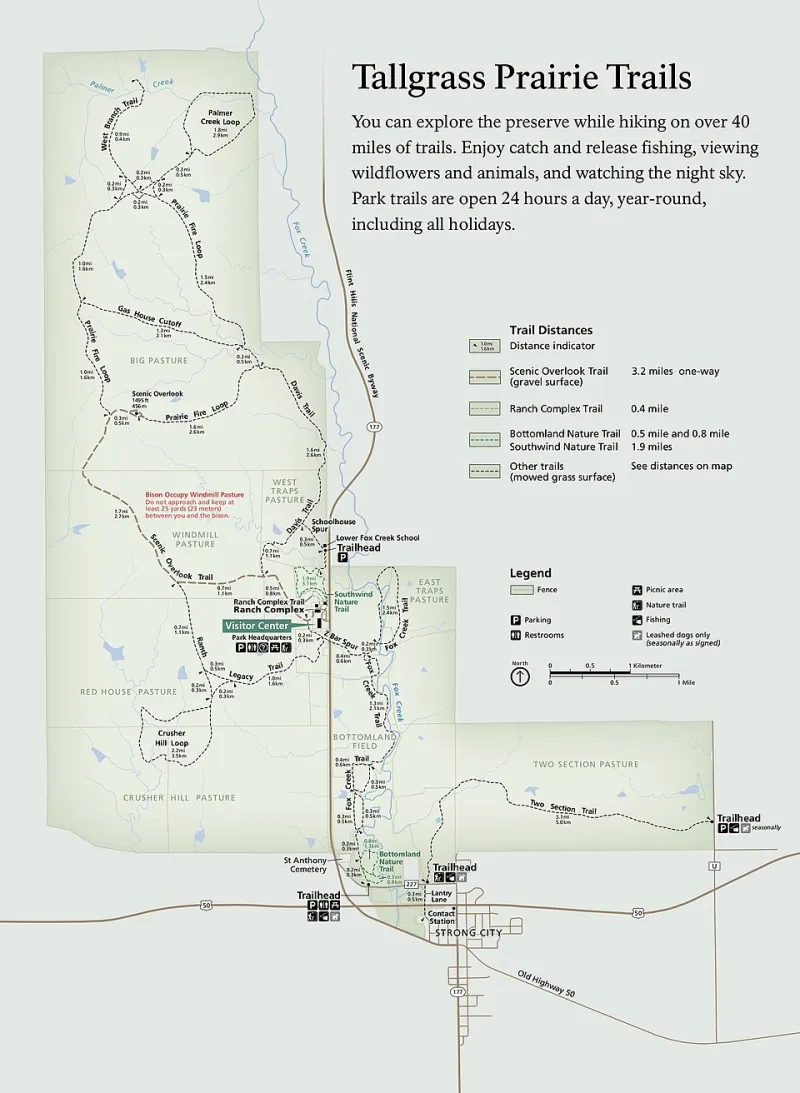
Photo: U.S. National Park Service, restoration/cleanup by National Park Maps (https://npmaps.com), Public domain, via Wikimedia Commons
Restoration is having a moment. Federal infrastructure and climate legislation, state wildlife action plans, and philanthropic commitments have pushed public and private spending on ecosystem repair to levels not seen in decades. Yet the policy infrastructure for judging whether that money works remains uneven. Projects are routinely assessed against site-specific conditions, pre-project photographs, or undocumented assumptions about what a given landscape would have looked like absent disturbance. The result is a restoration boom measured with an assortment of private rulers.
The baseline problem
Every restoration project rests on a counterfactual. A stream reach is compared with an upstream reference; a prairie planting is compared with a remnant patch; a wetland mitigation bank is compared with a nearby natural marsh. These comparisons are reasonable in principle, but in practice the reference is often chosen ad hoc, described in a few paragraphs, and monitored with protocols that vary by agency, contractor, and region. Two projects in the same watershed can report success against incompatible definitions of success.
This is not a failure of diligence. It is a structural gap. The United States has no shared registry of reference ecosystems—places deliberately selected and maintained as benchmarks for restoration. Nor does it have common protocols for describing those places, licensing their data, or keeping them monitored over time. Agencies such as the Natural Resources Conservation Service, the U.S. Army Corps of Engineers, and the Fish and Wildlife Service each rely on their own guidance, and states vary widely. The result is a body of restoration evidence that is rich in volume but thin in comparability.
What a registry would actually hold
A useful reference registry would not be a single national map of ideal ecosystems. It would be a distributed catalogue of benchmark sites, each documented with a standard minimum dataset: vegetation composition and structure, hydrology, soil attributes, disturbance history, and the monitoring protocol used. Sites would be nominated by agencies, tribes, land trusts, and research stations, then reviewed against published criteria. The registry would record the site’s intended use—for example, as a reference for tallgrass prairie reconstruction in a specific ecological subsection—rather than implying that one site can stand in for an entire biome.
The harder infrastructure is procedural. Each entry would need a data license that permits reuse in planning, procurement, and litigation without stripping the steward of attribution or control. Metadata would need versioning, because reference sites change. Monitoring would need to be funded beyond the initial nomination, which means treating reference sites as long-term assets rather than one-time data collection exercises. And the registry itself would need an independent steward—most plausibly a nonprofit consortium or a university-based coordination center—to avoid the appearance that a single agency controls the benchmark against which its own programs are judged.
Speed is not the enemy of standards
A common objection is that standardization slows project delivery. In practice, the opposite risk is more immediate: inconsistent baselines produce disputes, delays, and rework. A tiered registry can reduce friction. The first tier might require only a minimum metadata record and a public-domain license, suitable for small grants and emergency projects. A second tier could require a defined monitoring protocol and periodic re-survey, suitable for larger compensatory mitigation or landscape-scale programs. A third tier could support formal reference status, with independent review and long-term stewardship funding. Projects could use the tier appropriate to their scale, and funders could require higher tiers only where the public interest in comparability is highest.
This approach also addresses a familiar problem in conservation data: the tendency to treat information as a one-time deliverable. Reference sites are not static. Fire regimes, hydrology, climate, and species composition shift. A registry that does not fund remeasurement becomes a historical archive within a decade. Embedding modest stewardship costs into program budgets—rather than relying on volunteer monitoring or intermittent grants—would be a necessary design feature, not an afterthought.
Governance without a monopoly
A national registry need not imply federal ownership. The United States already operates successful models of distributed data stewardship, from state natural heritage programs to the Long Term Ecological Research Network. A reference registry could be built as a federated system: regional nodes maintain local sites and protocols, while a central coordinating body maintains the standard, the review process, and the public interface. Federal agencies would be major users and contributors, but not sole arbiters.
That matters for defensibility. When a restoration project is challenged—by a regulator, an auditor, or a court—the question is often not whether the project met its own goals, but whether those goals were reasonable. A registry with independent governance, transparent protocols, and licensed data gives all parties a common evidentiary foundation. It also gives agencies a way to compare outcomes across programs without commissioning a new study for every appropriation cycle.
A practical next step
The restoration boom will not wait for perfect standards. A workable path is to begin with a pilot registry in two or three ecological regions, using existing reference sites already monitored by federal and state programs. The pilot should test the minimum dataset, the licensing model, and the stewardship budget, and should be evaluated on whether it reduces disputes and improves comparability—not on whether it produces a polished public portal. If the pilot succeeds, the model can be extended through grants and interagency agreements rather than new statutory authority.
The policy question is not whether restoration should be measured. It is whether it will be measured against something shared. A reference registry is a modest piece of infrastructure for a very large public investment. Without it, the restoration boom will produce many projects and few comparable lessons.